Since 1971 the paper currencies have all been losing what they can buy, and the measure is annual consumer prices, with the early years estimated. The Swiss franc did the least bad and it is still down about 66%, the yen is down about 71%, and the US dollar and the Canadian dollar are both down about 87%, while the pound is down about 93% and a long tail of the list is down 99% or more.
You do not need the whole table to feel it, because the grocery bill already did that math, and a paycheck that sits in the paper is working against you. A house or a stock can run ahead of the paper, but then you are an investor just to stand still, and that is not cash in the hand.
Monero beats that chart because the new coins are a fixed drip a vote cannot turn up, and the price can still swing, so this is the supply rule and not a grocery promise. The amounts stay hidden, and the math still shows no coins were made from nothing, and a coin is not stained by where it has been, which the paper chart does not even measure.
That drip is called tail emission, and it has been on since June 2022 at 0.6 Monero about every two minutes, which is 0.3 a minute and about 158,000 coins a year. It was about 1% new coins in the first year, and it keeps falling toward zero, so it is a known trickle next to a printer that stayed open for fifty years. It also pays the miners, which keeps the fee small and the cash movable later, because a reward that goes to zero leaves the miners living on fees alone, and a savings you cannot move is not a win over the paper. People lose coins forever, and the project docs say that once you count those losses the usable pile can still shrink, so the tail is a small known replacement, not a second printer.
If the money is already owed to a bill, it cannot sit in a coin, so spare money is the only part that gets a choice, and the expensive part of moving is getting in and out of the paper, not the send itself.
https://www.getmonero.org/get-started/faq/#tail-emission
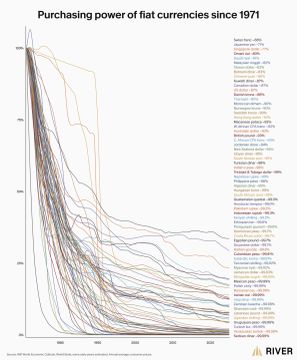
What is really interesting is that much of the deterioration of purchasing power from central banking was blunted by technological advancements, peace dividends, etc. That means that even with how terribly it has gone for the average/median citizen, if those advances didn't happen, it would have been much worse. That's a double-edged sword though because that also means the expansionary debt/monetary status quo was allowed to cause much more damage since those advancements prevented a greater catastrophic collapse.
Yeah, and the double edge goes one step further. Those advances did not only hold off a worse break, they earned a discount the paper was not allowed to show, because the job was to stop prices from falling when things got easier to make. The cart still filled, just not with the full gift, and shelter never got that help. The franc and the pound had the same tech and not the same loss, which is why the table is still about the money.
Exactly. Shelter is actually the most asinine thing to have be expensive. You can build a shed on bare land incredibly cheaply without all the regulations and interventions dragging you down. They literally won't allow you to set up camp or build a small shed on your own land in many areas. A small shed that can lock would be an amazing boon for people with no shelter whatsoever. The government interventions in housing have been some of the most pernicious. Zoning and gov backed mortgages are insane and they make residential real estate much more expensive.
I remember as a kid, my dad would fill a shopping cart full of groceries and it’d be in the $100 range. Now it’s that much for like 5 items
It's amazing to see prices constantly fall in Monero terms.
As an example, I love eggnog about this time of year, and I've seen eggnog down by 30% in a single year, and then 10% the next year.
The government successfully put the US dollar on a diet...
https://wtfhappenedin1971.com/
Oil currencies, swiss franc and monero are the hardest money