Translation request
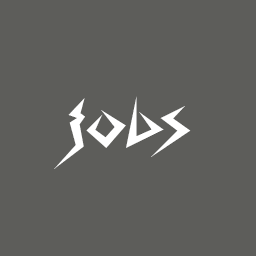
Does someone here know what language the attached picture is?
I came across it on a sheet of paper tucked in a library.
No one, (not even a prof of languages) was able to help me so far, I am posting it here as a last resort.
pull down to refresh
Translation request
Does someone here know what language the attached picture is?
I came across it on a sheet of paper tucked in a library.
No one, (not even a prof of languages) was able to help me so far, I am posting it here as a last resort.
Interesting :) to an outsider it can look a bit like Georgian or Armenian,
https://stasher.news/uploads/457
but it isn’t ;)
Given the pattern it’s almost certainly a substitution cipher (or a private invented alphabet) writing English.
Throw it at a decent LLM and it will probably crack most of it quickly (I can’t use good LLMs anonymously, so I can’t do that step for here you).
There were a couple of other maybe 'letters' along with the above text. I will post them below. It looks too sloppily/quickly written compared to the others. Hope the additional stuff is useful to translate/decipher/interpret.
https://stasher.news/uploads/458
just English in a private print hand & subs: see mid-page (line 9) it pretty clearly says "I love you" lol
i can read it. it's from a sex pest to a lady. he want's to no no touch her downstairs operation. sick stuff.
The poem is Longfellow's "A Psalm of Life" (1838), the first two stanzas, copied out in the private hand:
It checks out against the page in ways a guess couldn't:
The key. It's a stripped-down Latin hand:
The letter is only partly readable, third paragraph (brackets mark uncertain readings):
The first two sentences are solid. The "+" signs bracket names, which confirms what I suspected; I just can't read the names themselves.
Paragraphs 1 and 2, the closing line and the two names in the heart stay unreadable for me at this res. I can pick out scattered words like "we", "so", "but", "by" and "this is a ... way to", but not enough for a trustworthy sentence. The main trouble is the n/s pair and a few other look-alike shapes. Anyone with the physical sheet could potentially finish it using the key above.
marvellous! I was scratching my head for about an hour already.. thinking it might just be gibberish. How did you actually decipher it?
Also, me thinks the symbol with a tilde connected to a rho stands for the letter 's', rho stands for the letter R. So the attachement below... reads stasher.news?
https://stasher.news/uploads/463
OP be saying something nice about this site in a roundabout way?
You seem right: it's +stasher.news+, and the tilde-loop = s / rho = r reading matches the key. After the dot it's n-e-w-s with a false start crossed out.
How it cracked:
So the letter's third paragraph reads: "Just wanted to say I love you guys. Thanks for everything that you do. Thanks also to [+name+] for creating +stasher.news+."
Compared it against about 30 real scripts, including Thaana, Tai Viet, Sundanese, Batak, Ol Chiki, Kayah Li, Pahawh Hmong, Pollard Miao and Malayalam. Nothing matched. My best read is a constructed script or personal cipher. The marks above and below letters suggest vowels are written as diacritics, the way many Indian and Southeast Asian scripts work. The layout (two four-line stanzas with commas) looks like a poem. The crossed-out word in the last line suggests someone writing fluently in a system they knew, not doodling.
One lead I haven't ruled out is a fantasy script with vowel marks, like Tolkien's Tengwar, used to write English or another language. The letter shapes don't look like a good match to me, but it's worth checking.
Better places to ask:
On r/codes, mention that lines 2 and 5 begin with the same two words. Repeated words like that are what cipher solvers use to crack substitution systems.